
Everything a salt-side door needs
One trade, two tempos: urgent repairs when hardware lets go, and considered work, service rhythms, upgrades and new doors, done to marine-band spec. No prices on this page by design; every job is priced on site or by written quote before work starts.
The part that goes bang
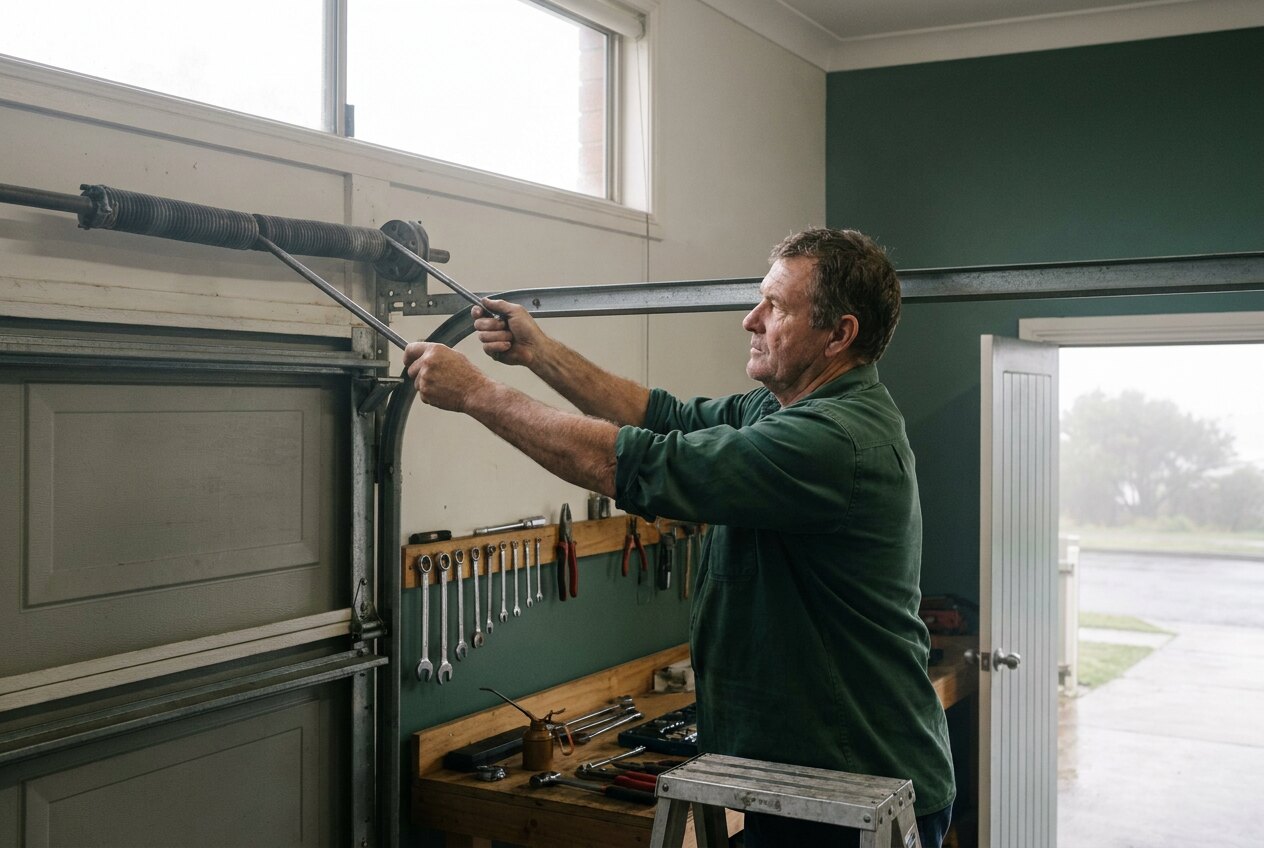
A torsion spring does the actual lifting; the opener only steers. Standard springs are rated around ten thousand open-close cycles, which is roughly seven to ten years of ordinary family use, and on the salt side pitting corrosion quietly shortens that budget. When a spring lets go you hear it through the house, and the door becomes dead weight.
Lift cables tell the same story in slow motion: strands fray at the drum or the bottom bracket where salt sits, and a cable that lets go under load can drop a door crooked into its tracks.
- Torsion and extension spring replacement, matched and tensioned to the door's true weight, with the pair replaced together where wear says so.
- Lift cable replacement at the first sign of fraying, not the last.
- A balance test before we leave: a healthy door sits still at half height.
A safety word: a wound spring stores serious energy. Winding bars, not spanners, and not a DIY job, ever. If your spring has gone, keep the door shut and the car out from under it.
Doors that grind, stick or wander
Rollers and tracks are where the onshore shows up first as a sound: a grind on the way up, a squeal at the turn, a door that shudders in its guides. Left alone, a seized roller chews its track and a small service becomes a big one. A door that has jumped its track altogether is an urgent job; don't run it again until someone has seen it.
- Roller replacement, with sealed-bearing and nylon options that shrug off salt where the standard part won't.
- Track realignment and re-railing for doors that have wandered or been clipped by a bumper.
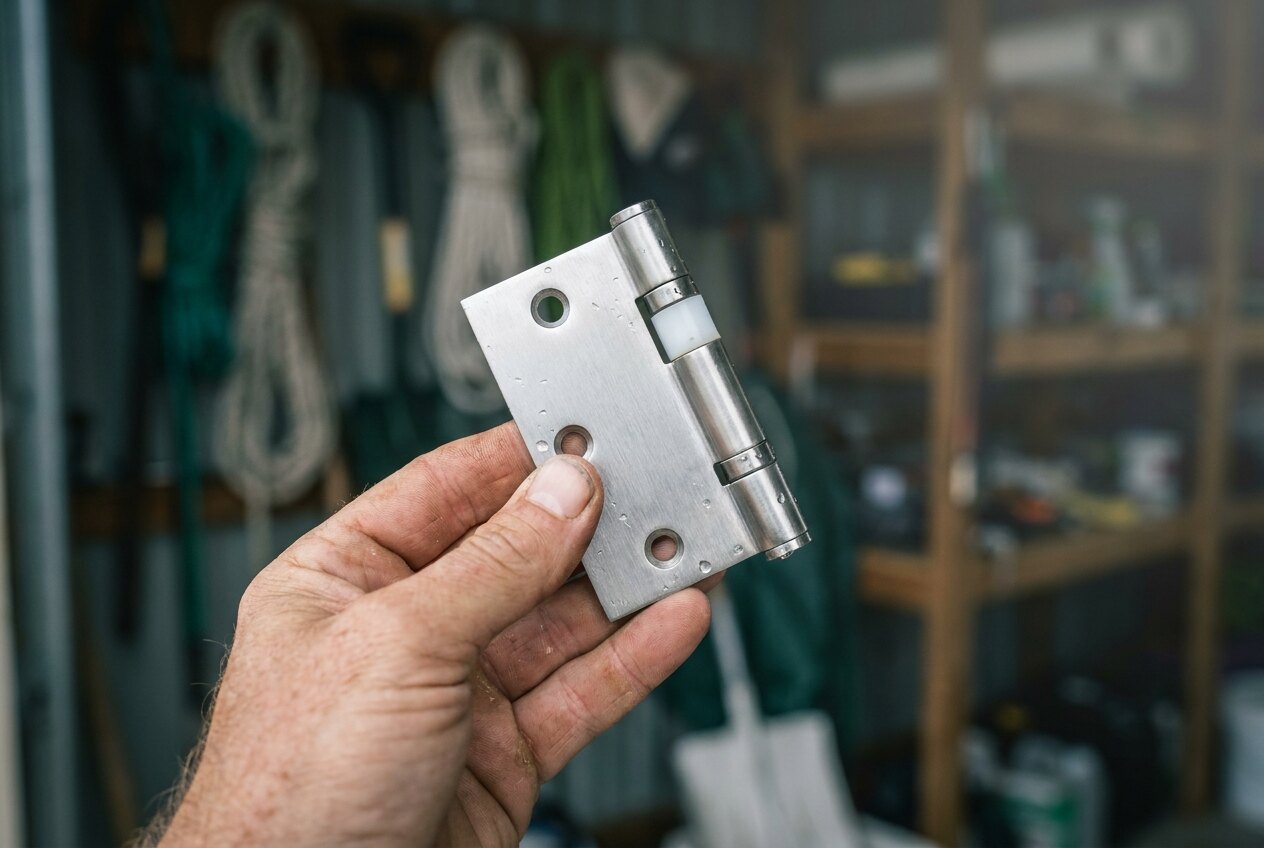
- Hinges and fixings upgraded to marine-grade stainless where the exposure earns it.
- Base seals and weather strips replaced, keeping wind-driven spray, sand and southerly rain out of the garage.
Sealed bearings 316 fixings New base seal
The motor, the rail and the brains
An opener that strains, stops halfway, or reverses at the floor is usually telling you about the door, not the motor: openers are sized to steer a balanced door, and a salt-stiffened spring makes the motor haul weight it was never meant to. We check balance first, then the machine.
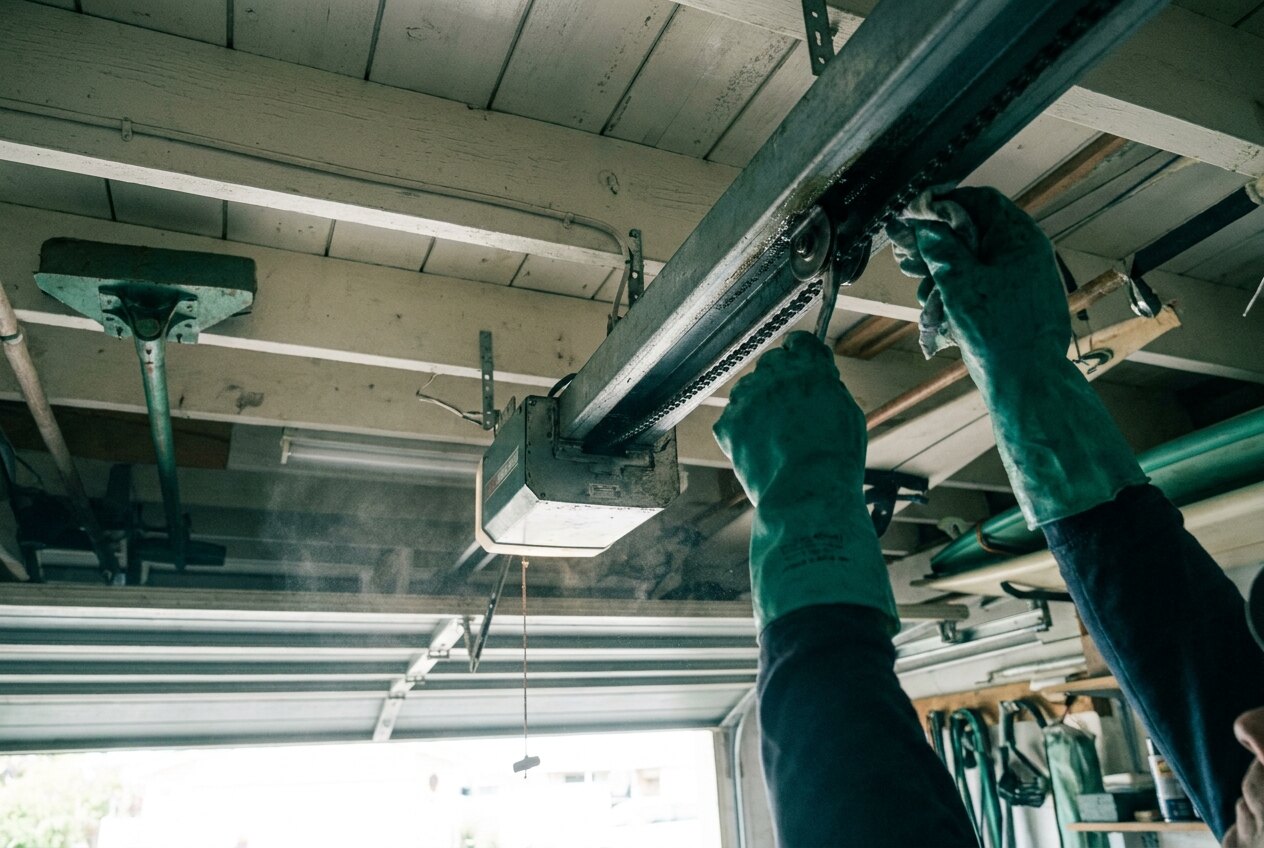
- Diagnosis and repair of rail-drive and roller-door motors that stop, strain or stutter.
- Replacement openers, including quiet belt-drive units worth considering when a bedroom sits over the garage.
- Safety beams checked and set: an automatic door must reverse when the beam is broken, and a faulty beam is a common reason a door refuses to close.
- Remotes, wall buttons and keypads supplied and re-coded.
- Battery-backup options, so a blackout doesn't lock the car in.
Where a new opener needs mains wiring, that part of the work is carried out by a licensed electrician, as it must be.
The salt-side service check
Everything on this page above happens after something has failed. This is the visit that happens before. One appointment, the whole door, read the way a boat fitter reads deck hardware: what the salt has started on, what's within tolerance, what should be swapped this year rather than found on the floor next winter.
- Springs and cables inspected for pitting, rust bloom and fray, and the balance tested.
- Rollers, hinges and tracks checked, cleaned and lubricated with marine-suited product.
- Opener force and safety-beam reverse tested; the rail wiped and dressed.
- Fixings torque-checked, and a plain-language report of what's ageing and when to look again.
How often? It depends where you sit between the break and the ridge. The salt exposure timeline gives you an honest rhythm for your street.
Doors that belong on the street
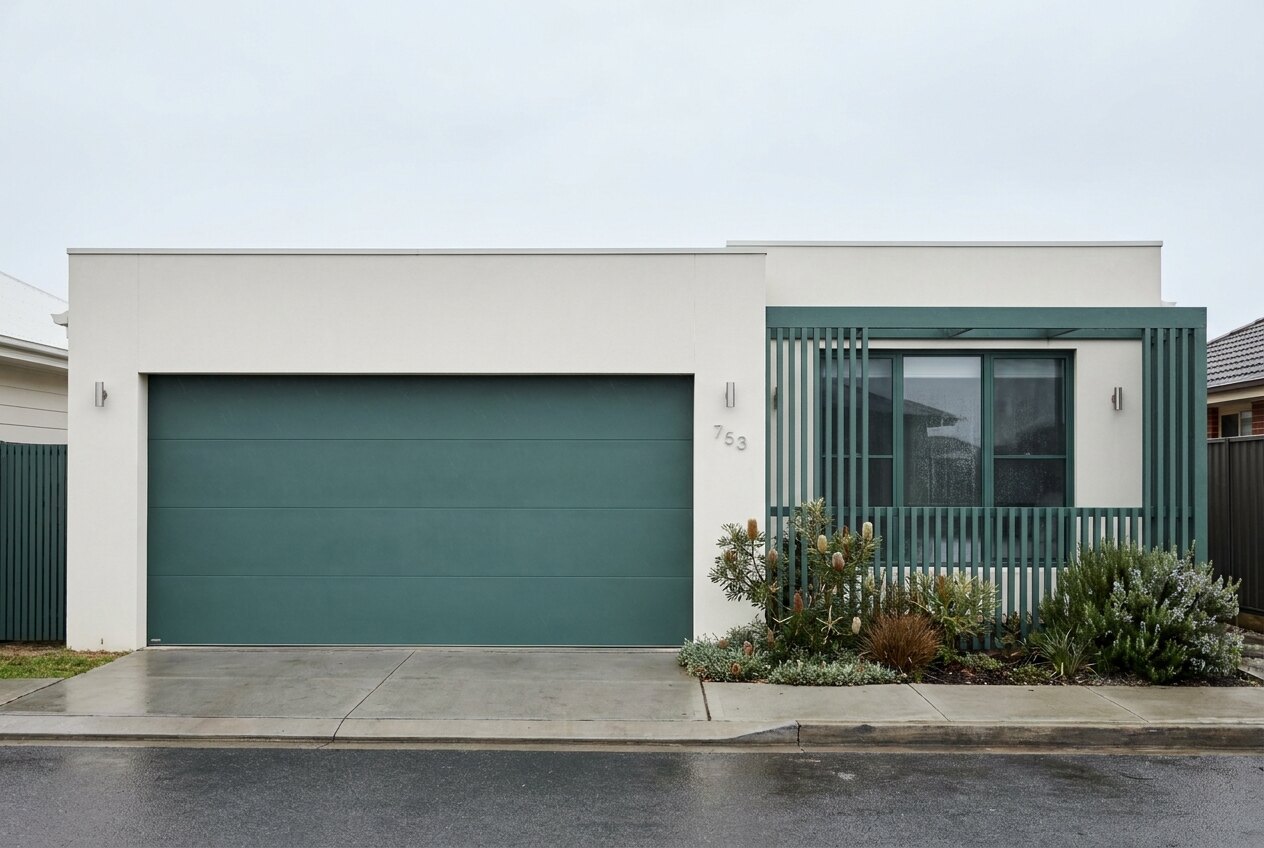
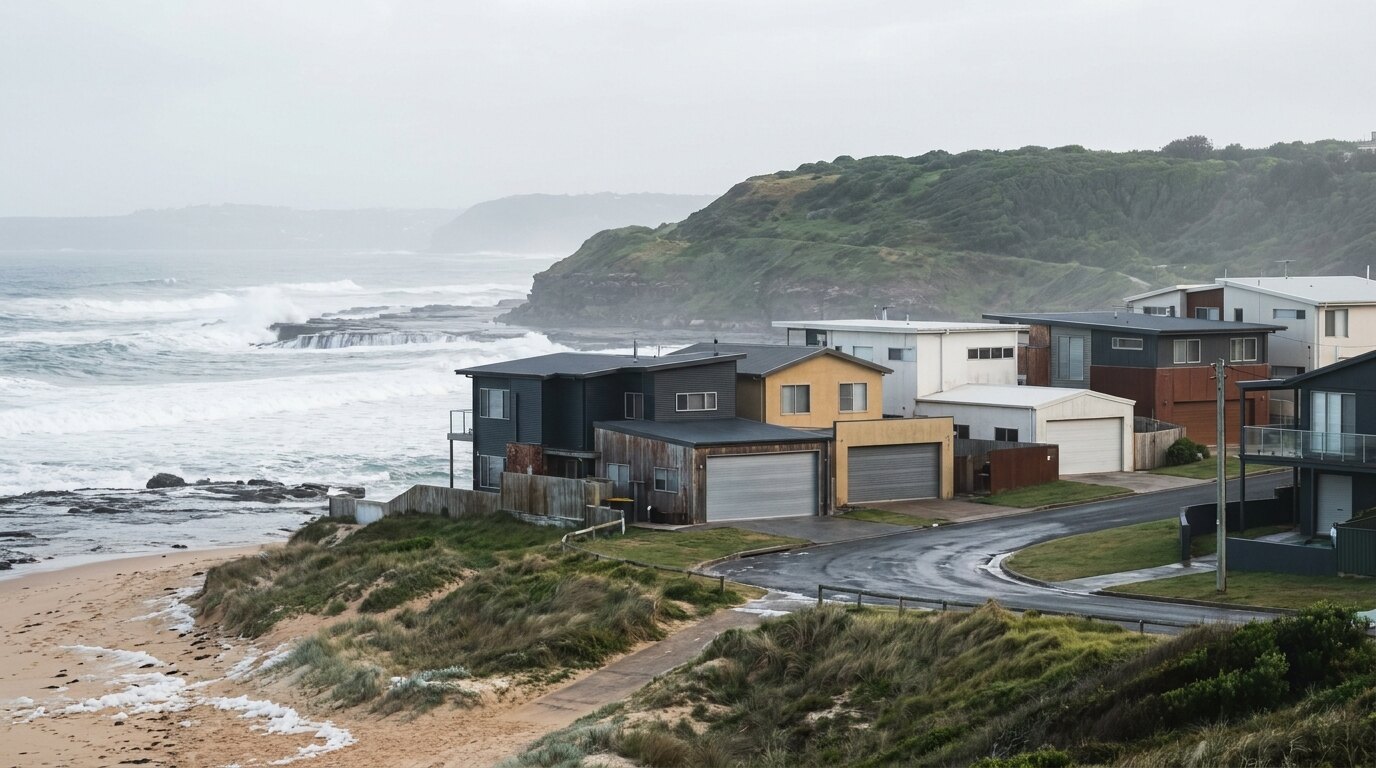
On a renovated Merewether block the garage door is often the single widest element facing the street, wider than the front door, wider than any window. Get it right and the whole house reads considered. We treat a new door as a facade decision first and a machine second, then spec the machine properly anyway.
- Sectional doors, the modern default: panel profile and line chosen against the house, insulated panels where a west-facing door bakes, standard lift needing roughly 300 to 400 mm of headroom.
- Roller doors for tight ceilings and narrow openings, needing only around 200 to 250 mm of headroom, the honest pick for many older and under-house garages.
- Tilt doors mostly as a repair-or-replace conversation: a big installed base in the older streets, rarely the right new install.
- Colour matching to your roof and trim from the standard Colorbond range, offered as an on-site process with real swatches, not a screen guess and never a guarantee of a perfect batch match.
- Marine-band hardware as the default conversation, not an upsell: stainless fixings, protected springs, sealed rollers, because a beautiful door that seizes is a bad door.
We supply across the common Australian door and opener brands generically, and we're not an authorised dealer for any of them: the recommendation follows your garage's geometry and exposure, not a franchise agreement.
Choosing between the three types on a hill block? The guide Sectional, roller or tilt: choosing for Merewether's geometry walks the whole decision.