
Areas / Bar Beach & The Junction
Heaviest exposure · the front rowsWhere the onshore lands first
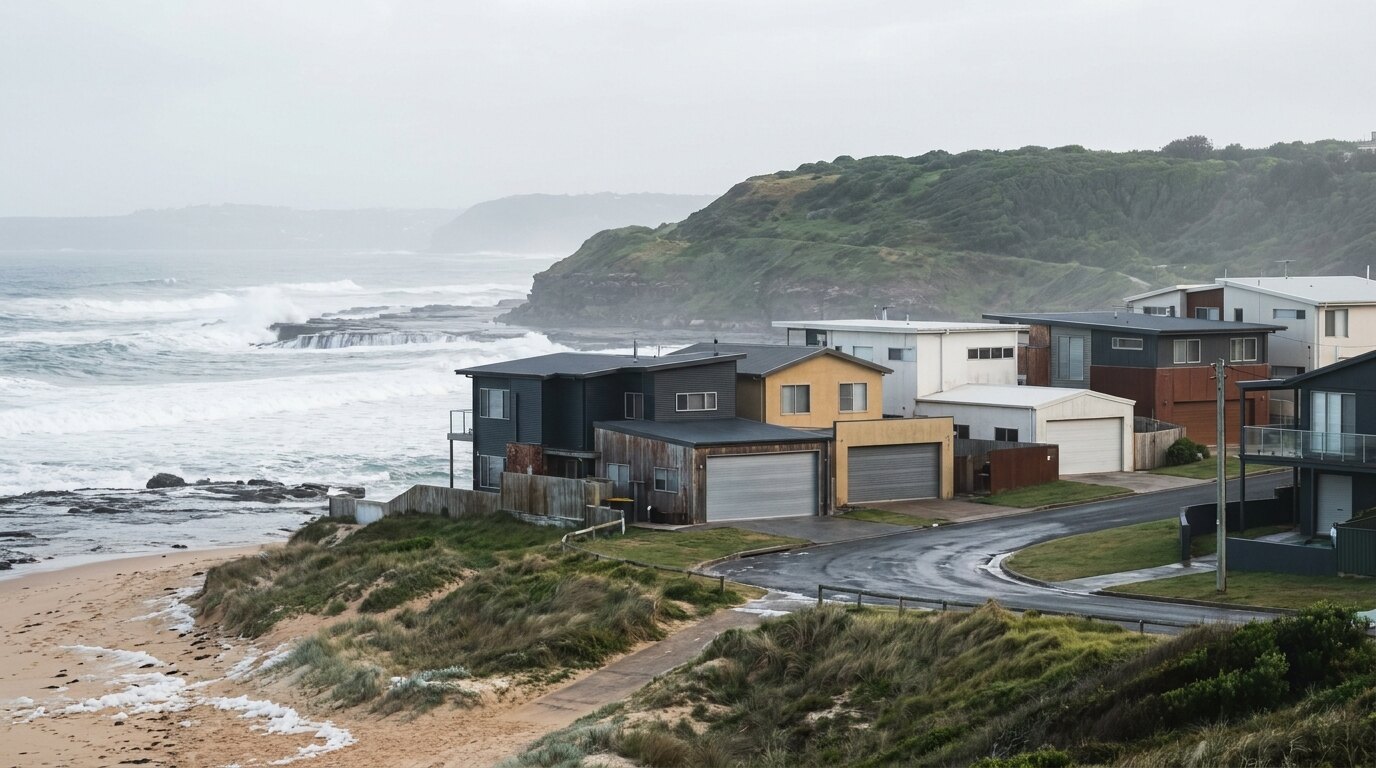
Bar Beach is the shoreline reference point for this whole patch: when we measure how far any street sits from the surf, we measure it from here. If your garage door faces these streets, it lives at the heavy end of the coastal band, and that changes what honest door care looks like.
What "heavy exposure" actually means for a door
Australia's corrosivity standard, AS 4312, reasons about salt the way surfers reason about swell: it's generated at the break and carried on the wind, strongest right at the coast and fading with distance and shelter. On these streets there is no distance and no shelter. Wave aerosol lands on garage hardware most days of the year.
On the door itself, the damage concentrates where steel moves against steel: the torsion spring's coils, the strands of the lift cables, roller bearings, hinge pins, the opener's rail. Salt pitting on a spring doesn't slow the door down; it just quietly spends the spring's cycle budget early. Front-row doors look fine right up until the bang.
Two honest consequences follow. First, a yearly service rhythm genuinely earns its keep here, because catching a pitted spring at a tune-up is a small planned job instead of a jammed-car morning. Second, when parts are replaced on these streets, marine-grade is the default spec, not the upgrade: 316 stainless fixings, sealed or nylon rollers, protected springs.
AS 4312 heavy band 316 stainless default Yearly rhythm
What we see most on these streets
- Springs that snap years inside their rated cycle life, pitted through the outer coils.
- Lift cables furring at the bottom brackets, where spray wets them and grit holds it there.
- Seized rollers grinding tracks oval, the squeal owners learn to ignore until the door jams.
- Rust bloom on hinges and fixings within a few seasons of a standard-spec install.
- Opener rails dressed with salt film, wearing trolleys early.
The front-row rule is simple: on these streets you don't wait for a symptom, because the failure mode doesn't offer one.
The Junction: shelter you shouldn't bank on
Behind the beach rows, The Junction runs on its own rhythm: the shopping strip, and around it some of the patch's most consistently renovated housing. The extra blocks of distance take the edge off the aerosol, but this is still coastal Newcastle air on the AS 4312 logic, and the doors here are often older than they look from the street.
Junction work for us is a blend: service rhythms a notch more relaxed than the front rows, a steady line of ageing-hardware repairs on doors that predate their renovations, and facade-grade replacements where a reno has reached the garage line and the old door suddenly looks like the last unfinished thing on the house.
If you're planning that replacement, start with the new doors rundown, or go straight to a free measure and quote.
The Junction checklist
- Doors older than their renovations: original hardware behind repainted panels.
- Openers from a previous decade straining against stiffened springs.
- Replacement doors chosen for the facade, specced for the coast anyway.
Not sure which band your street really sits in? Run the salt exposure timeline; it reads exactly this gradient.